

Understanding How Odoo ERP Enables Lean Manufacturing and JIT

by Uzlifat Mir
- Sep 16, 2025
- 0
- Category: Odoo Manufacturing
Odoo ERP is often praised for its flexibility and open-source roots, letting companies manage everything from accounting to inventory in one place. Yet, what surprises most people is just how much it can be customized—Odoo offers hundreds of modules, letting you tailor the system to match any workflow. Most business software forces you into rigid processes but Odoo flips the script and lets your business call the shots, not the other way around.
Table of Contents
- What Is Odoo Erp And How Does It Function?
- The Principles Of Lean Manufacturing Explained
- Understanding Just-in-Time (JIT) Manufacturing
- The Integration Of Odoo Erp With Lean Manufacturing
- Real-World Benefits Of Odoo Erp For Lean And JIT
Quick Summary
| Takeaway | Explanation |
|---|---|
| Odoo ERP offers flexible, modular solutions | Companies can customize Odoo ERP to fit unique operational processes and improve efficiency across departments. |
| Lean manufacturing minimizes waste effectively | Lean principles focus on identifying and eliminating waste, ensuring resources are used efficiently while maximizing productivity. |
| Just-in-Time production improves resource allocation | JIT manufacturing aligns production schedules with demand, reducing excess inventory and enhancing responsiveness to market changes. |
| Integration of Odoo ERP with lean practices enhances performance | Utilizing Odoo ensures data-driven decision-making and precise management of lean methodologies, leading to operational excellence. |
| Real-time insights drive strategic transformation | Odoo ERP’s capabilities provide detailed analytics that support proactive management and continuous improvement initiatives in manufacturing. |
What is Odoo ERP and How Does It Function?
Odoo ERP represents a comprehensive, integrated software solution designed to help businesses streamline their operational processes across multiple departments. As an open-source enterprise resource planning platform, Odoo provides organizations with a flexible and scalable system that can adapt to diverse business requirements.
Core Architecture and Functionality
At its foundation, Odoo ERP functions as a modular platform that enables businesses to manage critical operations through interconnected applications. These applications cover essential business domains such as:
- Accounting and financial management
- Customer relationship management (CRM)
- Human resources and payroll
- Manufacturing and inventory control
- Sales and purchase management
- Project tracking and collaboration
The system’s unique architecture allows seamless integration between these modules, creating a unified ecosystem where data flows smoothly across different organizational functions. Unlike traditional rigid ERP systems, Odoo offers unprecedented customization capabilities, enabling businesses to tailor the platform precisely to their operational workflows.
Understanding Odoo’s Technical Framework
Odoo operates on a powerful technical framework built using Python programming language and PostgreSQL database management system. This combination provides robust performance, security, and scalability. The platform supports multiple deployment models including on-premise, cloud-based, and hybrid configurations, giving businesses the flexibility to choose an implementation strategy that best suits their technological infrastructure.
For businesses seeking comprehensive ERP solutions, learn more about Odoo’s powerful modular approach and how it can transform organizational efficiency. Bista Solutions specializes in helping companies implement and optimize Odoo ERP systems, ensuring seamless digital transformation and operational excellence.
By offering an integrated, adaptable platform, Odoo ERP empowers organizations to centralize their data, automate complex processes, and make informed strategic decisions with real-time insights and comprehensive reporting capabilities.
The Principles of Lean Manufacturing Explained
Lean manufacturing is a systematic approach to production that focuses on minimizing waste while maximizing productivity and value creation. Originating from Toyota’s production philosophy in the mid-20th century, this methodology has transformed manufacturing processes across global industries by emphasizing efficiency, continuous improvement, and waste elimination.
Core Philosophical Foundations
At its essence, lean manufacturing is built on five fundamental principles that guide organizational transformation. These principles are not merely operational strategies but represent a comprehensive philosophy of production and organizational management:
- Value Identification: Understanding what customers truly value
- Value Stream Mapping: Analyzing and optimizing entire production processes
- Creating Continuous Flow: Eliminating interruptions and bottlenecks
- Establishing Pull Systems: Producing only what is immediately required
- Pursuing Continuous Improvement: Constantly seeking operational enhancements
These principles challenge traditional manufacturing paradigms by shifting focus from mass production to precision-driven, customer-centric manufacturing. Instead of generating excessive inventory, lean manufacturing aims to create exactly what customers need, precisely when they need it.
Waste Reduction Strategies
Waste reduction represents the cornerstone of lean manufacturing. Organizations practicing lean methodologies systematically identify and eliminate eight primary forms of waste: overproduction, waiting times, transportation inefficiencies, excessive processing, inventory surplus, unnecessary movement, defects, and underutilized human potential.
By exploring advanced lean manufacturing techniques, businesses can transform their operational models. The goal is not merely cost reduction but creating a responsive, adaptive manufacturing ecosystem that continuously evolves to meet changing market demands.
The table below summarizes the eight types of waste targeted by lean manufacturing, as described in the article, and gives a brief explanation of each.
| Type of Waste | Explanation |
|---|---|
| Overproduction | Making more than is needed or before it is needed |
| Waiting Times | Idle time caused by delays between production steps |
| Transportation | Unnecessary movement of materials or products |
| Excessive Processing | Performing more work or using more resources than required |
| Inventory Surplus | Holding extra raw materials, work-in-progress, or finished goods |
| Unnecessary Movement | Extra motion by people, equipment, or machinery |
| Defects | Errors or flaws that require rework or result in waste |
| Underutilized Potential | Not using employee skills, talents, or ideas effectively |
Lean manufacturing transcends traditional cost-cutting approaches. It represents a holistic philosophy of organizational excellence, emphasizing respect for human resources, continuous learning, and systemic efficiency. Through disciplined implementation, companies can achieve remarkable improvements in productivity, quality, and customer satisfaction.
Understanding Just-in-Time (JIT) Manufacturing
Just-in-Time (JIT) manufacturing represents a revolutionary production strategy that fundamentally transforms traditional inventory management and manufacturing processes. By focusing on producing goods exactly when they are needed and in the precise quantities required, JIT challenges conventional mass production paradigms and delivers unprecedented operational efficiency.
Core Principles and Methodology
JIT manufacturing operates on several critical principles that distinguish it from traditional production approaches:
- Minimal Inventory: Maintaining only essential materials and components
- Precise Production Scheduling: Manufacturing products based on immediate demand
- Reduced Waste: Eliminating excess inventory and associated storage costs
- Streamlined Supply Chain: Creating direct, responsive connections between production and customer needs
- Quality-Driven Processes: Emphasizing defect prevention over defect detection
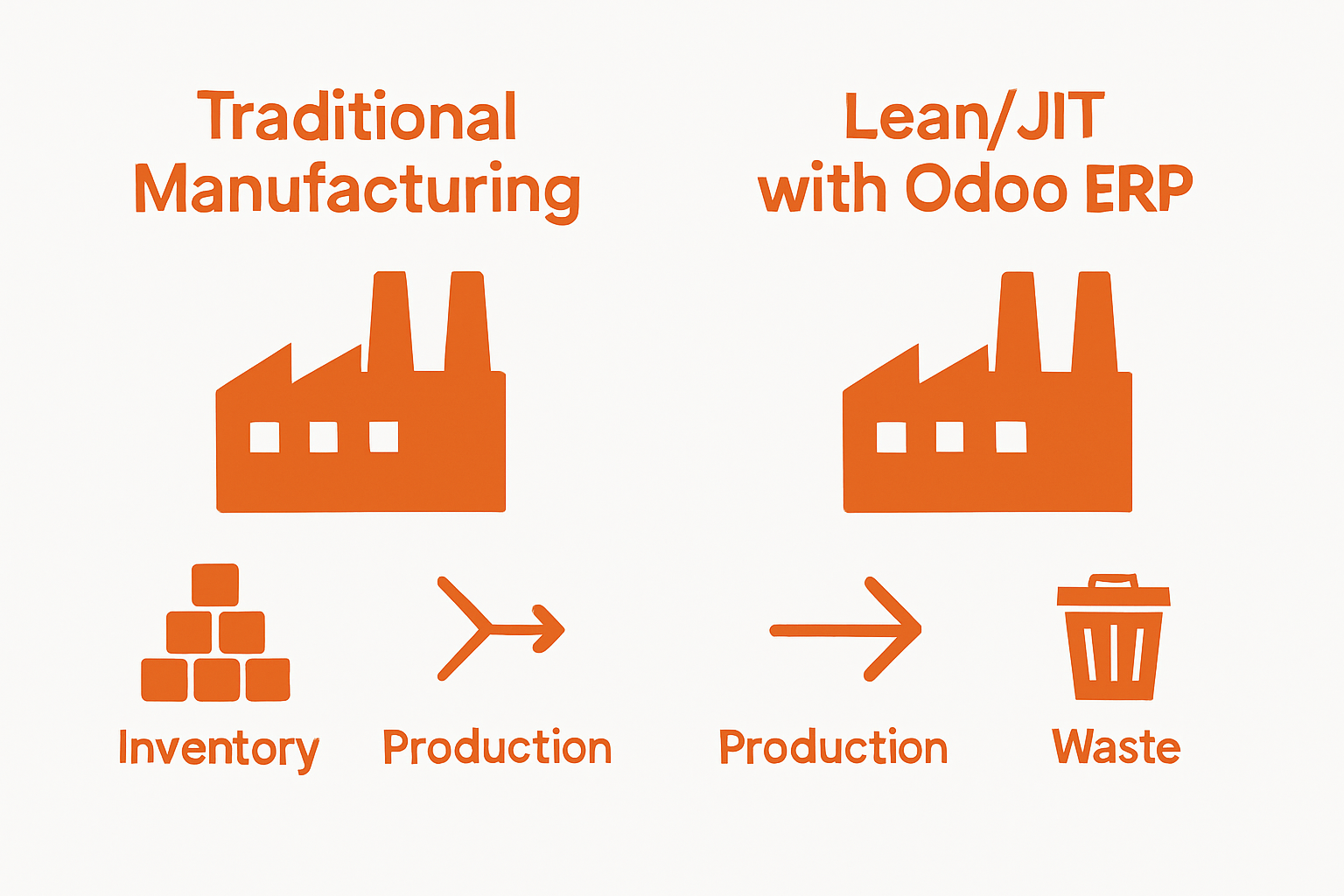
The fundamental goal of JIT is to transform manufacturing from a push-based to a pull-based system.
This means production is triggered by actual customer demand rather than speculative forecasting, dramatically reducing waste and improving resource allocation.
Strategic Implementation and Benefits
Successful JIT implementation requires sophisticated coordination across multiple organizational functions. Manufacturers must develop robust communication channels, precise demand forecasting capabilities, and agile production systems. Explore advanced manufacturing optimization techniques to understand how technology enables these complex operational strategies.
By adopting JIT principles, organizations can achieve significant competitive advantages. The approach reduces capital tied up in inventory, minimizes storage expenses, improves product quality, and creates a more responsive manufacturing ecosystem. Companies implementing JIT often experience reduced production cycle times, lower operational costs, and enhanced ability to meet rapidly changing market demands.
While JIT manufacturing presents complex challenges, its potential to revolutionize production processes makes it an increasingly critical strategy for businesses seeking operational excellence in competitive global markets.
This table provides a side-by-side comparison of Lean Manufacturing and Just-in-Time (JIT) Manufacturing based on principles and focus areas highlighted in the article.
| Concept | Primary Focus | Key Principles | Main Outcomes |
|---|---|---|---|
| Lean Manufacturing | Waste reduction, process efficiency | Value Identification, Flow, Pull, Continuous Improvement | Higher productivity, reduced waste |
| JIT Manufacturing | Producing only as needed, inventory minimization | Minimal Inventory, Demand-based Production, Streamlined Supply Chain | Lower inventory costs, faster response to demand |
The Integration of Odoo ERP with Lean Manufacturing
Odoo ERP represents a powerful technological solution that seamlessly aligns with lean manufacturing principles, offering manufacturers an integrated platform to optimize production processes, reduce waste, and enhance operational efficiency. By providing comprehensive tools that support continuous improvement and real-time data management, Odoo transforms traditional manufacturing approaches.
Technological Alignment with Lean Principles
The integration of Odoo ERP with lean manufacturing creates a sophisticated ecosystem that enables organizations to implement core lean strategies with unprecedented precision:
- Real-Time Inventory Tracking: Monitoring material usage and consumption
- Automated Production Planning: Generating precise manufacturing schedules
- Waste Identification: Detecting inefficiencies through comprehensive analytics
- Resource Optimization: Allocating human and material resources strategically
- Performance Measurement: Tracking key performance indicators continuously
Odoo’s modular architecture allows seamless customization, enabling manufacturers to design workflows that precisely match their unique operational requirements. This flexibility transforms traditional manufacturing management from reactive to proactively predictive.
Advanced Manufacturing Capabilities
Through its robust manufacturing module, discover comprehensive manufacturing execution strategies that enable businesses to implement sophisticated lean principles. Odoo provides advanced features like Bill of Materials management, work order tracking, and production planning that directly support lean methodologies.
The platform’s ability to integrate multiple operational functions creates a holistic approach to manufacturing management. By connecting inventory, procurement, production, and sales modules, Odoo ensures that every organizational process contributes to waste reduction and continuous improvement.
Ultimately, Odoo ERP does more than manage manufacturing processes. It becomes a strategic partner in organizational transformation, empowering businesses to adopt lean principles with technological precision and data-driven insights.
Real-World Benefits of Odoo ERP for Lean and JIT
Odoo ERP delivers transformative benefits for manufacturers seeking to implement lean and Just-in-Time (JIT) production strategies. By providing a comprehensive technological ecosystem, Odoo enables businesses to dramatically improve operational efficiency, reduce waste, and create more responsive manufacturing environments.
Operational Performance Enhancement
The practical advantages of implementing Odoo ERP in lean manufacturing contexts extend across multiple critical business dimensions:
- Inventory Precision: Reducing excess stock and associated carrying costs
- Production Flexibility: Rapidly adapting manufacturing schedules to demand changes
- Resource Allocation: Optimizing human and material resources with unprecedented accuracy
- Waste Minimization: Identifying and eliminating inefficiencies in real time
- Cost Reduction: Streamlining processes to decrease overall operational expenses
Granular data tracking represents a fundamental breakthrough, allowing manufacturers to make informed decisions based on comprehensive, instantaneous insights. This capability transforms traditional reactive management into a proactive, predictive approach.
Strategic Business Transformation
Explore advanced warehouse management strategies that demonstrate how technology can revolutionize manufacturing operations. Odoo’s integrated platform goes beyond traditional ERP functionality, serving as a strategic partner in organizational transformation.
By connecting multiple operational modules including procurement, inventory, production, and sales, Odoo creates a holistic ecosystem where every process contributes to continuous improvement. Manufacturers gain the ability to implement lean principles with technological precision, reducing manual interventions and minimizing human error.
Ultimately, Odoo ERP empowers businesses to transcend traditional manufacturing limitations. It provides a robust, flexible framework that supports lean and JIT methodologies, enabling organizations to compete more effectively in increasingly complex global markets.
Unlock Real Results With Odoo ERP and Bista Solutions
Struggling to bring true lean manufacturing and Just-in-Time (JIT) efficiency to your production floor? Many companies hit roadblocks when trying to minimize waste, streamline data, or react quickly to market changes. This article explained how the integration of Odoo ERP with lean and JIT strategies solves these challenges by connecting processes, cutting inefficiencies, and delivering actionable insights. But success depends on the right expertise and technology partner.
Experience what seamless implementation feels like. Bista Solutions is the largest Odoo ERP partner in North America with a proven record of transforming operations through comprehensive manufacturing execution and advanced warehouse management strategies. Our award-winning team has helped 350+ companies achieve real-time inventory precision and flexible production with Odoo. Ready to finally achieve your lean and JIT goals? Contact Bista Solutions now and see how we can turn efficiency into your competitive edge.
Frequently Asked Questions
What is Odoo ERP and how does it relate to lean manufacturing?
Odoo ERP is an integrated software solution that helps businesses optimize their operational processes. It aligns with lean manufacturing principles by providing tools for waste reduction, real-time data tracking, and continuous improvement.
How does Odoo ERP support Just-in-Time (JIT) manufacturing?
Odoo ERP supports JIT manufacturing by allowing businesses to maintain minimal inventory levels, produce items based on immediate demand, and streamline supply chain processes to minimize waste.
What are the key features of Odoo ERP that enhance lean manufacturing?
Key features include real-time inventory tracking, automated production planning, waste identification through analytics, and performance measurement capabilities that promote continuous improvement in manufacturing operations.
Can Odoo ERP be customized to fit specific lean manufacturing needs?
Yes, Odoo ERP’s modular architecture allows for extensive customization, enabling businesses to tailor the platform to their unique operational workflows and lean manufacturing practices.
