

Why Odoo Is Transforming Discrete Manufacturing ERP

by Uzlifat Mir
- Jan 21, 2026
- 0
- Category: Odoo Manufacturing
Managing multiple production orders, inventory stacks, and quality checks can quickly become complicated for mid-sized manufacturing teams in Texas. The need for unified control grows as product lines diversify and customer demands evolve. Odoo ERP’s modular approach brings together essential elements like manufacturing management, inventory, and quality in a single adaptable solution, giving operations managers a practical way to maintain order and efficiency in discrete manufacturing environments.
Table of Contents
- Odoo ERP For Discrete Manufacturing Defined
- Core Modules And How They Work Together
- Key Benefits For Mid-Sized Manufacturers
- Common Implementation Challenges And Solutions
- Comparing Odoo With Other ERP Systems
Key Takeaways
| Point | Details |
|---|---|
| Discrete Manufacturing Focus | Odoo ERP is tailored for discrete manufacturing, enabling detailed tracking of individual product lifecycles and appropriate customization based on unique production needs. |
| Modular Architecture | The platform’s modular design allows seamless integration across various business functions, enhancing operational efficiency and reducing information silos. |
| Real-Time Data Insights | Odoo provides real-time visibility into production workflows, enabling informed decision-making and quick responses to market changes. |
| Cost-Effective Implementation | Odoo’s open-source framework allows for reduced implementation costs and flexibility, making it an attractive option for mid-sized manufacturers. |
Odoo ERP for Discrete Manufacturing Defined
Discrete manufacturing represents a specialized production approach focused on creating distinct, countable products like automobiles, furniture, electronics, and machinery. Unlike process manufacturing, which produces goods in bulk or continuous quantities, discrete manufacturing involves assembling unique items with a specific bill of materials and precise production sequences. Odoo ERP provides comprehensive software solutions uniquely tailored to manage these complex manufacturing workflows.
At its core, Odoo enables discrete manufacturers to track individual product lifecycles through advanced management capabilities. Manufacturers can leverage the Odoo Manufacturing ERP Solution to manage critical operational components like production orders, work center scheduling, inventory control, and quality management. The platform’s modular architecture allows businesses to customize workflows that match their specific production requirements, providing unprecedented operational flexibility.
Key features of Odoo for discrete manufacturing include:
- Detailed bill of materials (BOM) management
- Real-time production tracking
- Inventory optimization
- Integrated quality control processes
- Comprehensive reporting and analytics
Pro tip: When implementing Odoo for discrete manufacturing, conduct a thorough workflow mapping exercise to ensure the ERP configuration precisely matches your unique production processes and operational requirements.
Core Modules and How They Work Together
Odoo’s ecosystem for discrete manufacturing is built around a sophisticated modular architecture that enables seamless integration across business functions. The platform’s core modules are strategically designed to communicate and share data in real-time, creating a unified operational environment that eliminates traditional information silos. Production Planning & Scheduling ERP demonstrates how these interconnected modules transform manufacturing workflows.
The primary core modules in Odoo’s discrete manufacturing suite include Manufacturing, Inventory, Purchase, Sales, Accounting, and Quality Management. Each module plays a critical role in the production ecosystem:
- Manufacturing Module: Manages production orders, work centers, and bill of materials
- Inventory Module: Tracks raw materials, finished goods, and stock movements
- Purchase Module: Handles supplier interactions, procurement, and material requisitions
- Sales Module: Manages customer orders, quotations, and sales forecasting
- Accounting Module: Provides financial tracking, cost analysis, and reporting
- Quality Management Module: Ensures product compliance and tracks quality control processes
These modules interact through intelligent data synchronization, enabling manufacturers to track a product’s entire lifecycle from initial order to final delivery. When a production order is created, the system automatically updates inventory levels, triggers purchase requisitions for needed materials, and generates corresponding accounting entries. This holistic approach reduces manual data entry, minimizes errors, and provides unprecedented operational transparency.
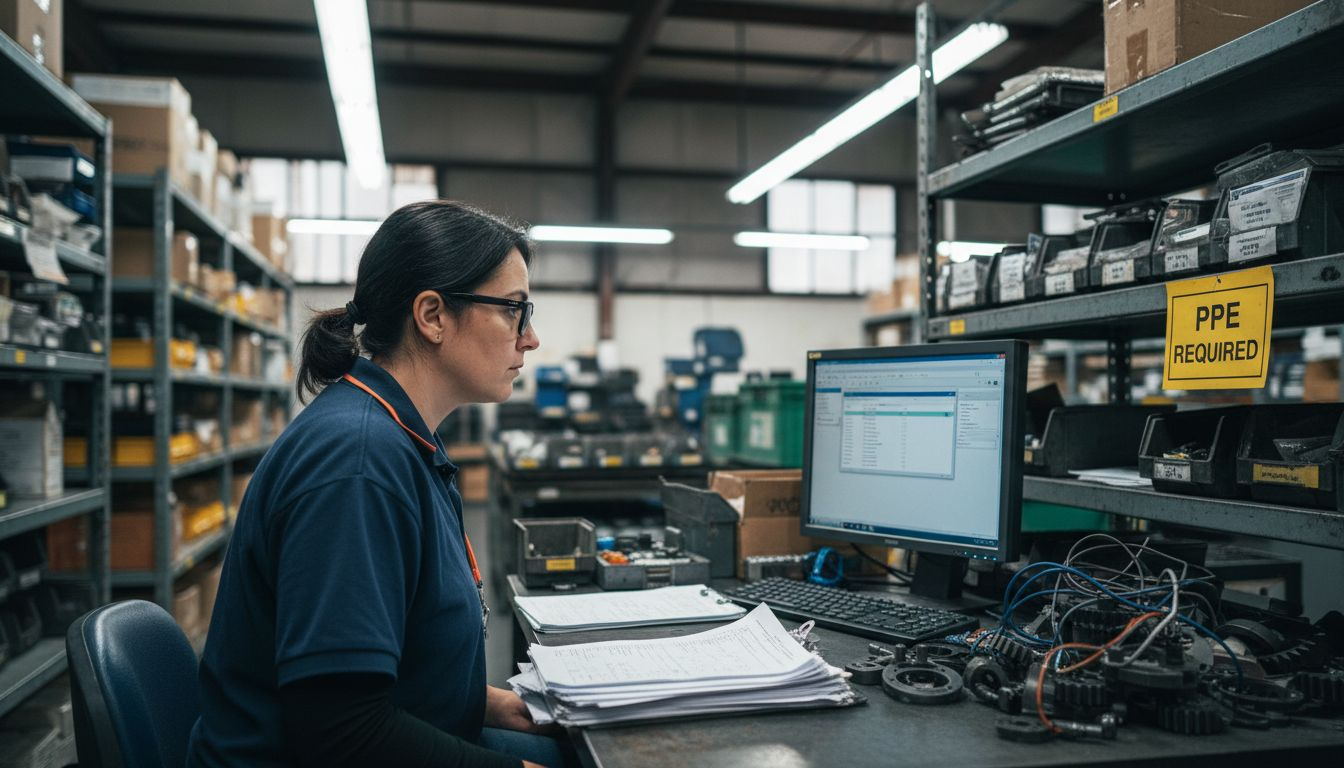
Here’s how the core Odoo modules specifically benefit discrete manufacturing processes:
| Module | Main Function | Example Benefit for Discrete Manufacturing |
|---|---|---|
| Manufacturing | Manages production orders and work centers | Enables precise assembly line coordination |
| Inventory | Tracks components and stock levels | Reduces material shortages and excess stock |
| Purchase | Manages supplier procurement | Ensures timely material replenishment |
| Quality Management | Monitors compliance and inspections | Improves product consistency and traceability |
| Accounting | Provides production cost analysis | Supports margin tracking for each product batch |
Pro tip: Before implementing Odoo, conduct a comprehensive mapping of your current business processes to ensure each module is configured to match your specific operational workflows and reporting requirements.
Key Benefits for Mid-Sized Manufacturers
Mid-sized manufacturers face unique operational challenges that demand flexible, cost-effective technological solutions. Odoo ERP emerges as a transformative platform specifically designed to address these complex requirements, offering unprecedented operational agility and strategic advantages. Odoo Manufacturing Module provides mid-sized manufacturers with a comprehensive toolkit to optimize their production ecosystems and compete more effectively in dynamic market environments.
The key benefits for mid-sized manufacturers implementing Odoo ERP include:
- Cost Optimization: Reduced implementation and maintenance expenses
- Scalable Architecture: Modular design that grows with business needs
- Operational Visibility: Real-time insights across production workflows
- Compliance Management: Built-in tools for regulatory adherence
- Resource Efficiency: Streamlined processes that minimize waste and maximize productivity
Odoo’s open-source framework enables mid-sized manufacturers to customize their enterprise resource planning without incurring prohibitive expenses typical of traditional ERP systems. The platform’s intelligent modules communicate seamlessly, creating an integrated environment that supports everything from inventory management to quality control. By eliminating information silos and providing comprehensive data analytics, manufacturers can make more informed strategic decisions, respond quickly to market changes, and maintain a competitive edge.
Pro tip: Conduct a thorough internal assessment of your current manufacturing processes before implementing Odoo to ensure maximum alignment between your operational workflows and the ERP configuration.
Common Implementation Challenges and Solutions
Implementing an Enterprise Resource Planning (ERP) system like Odoo in a discrete manufacturing environment presents complex challenges that require strategic planning and nuanced approaches. 7 Steps to Implement Odoo ERP in Manufacturing Plant highlights the critical considerations manufacturers must navigate during digital transformation. The most prevalent challenges cluster around three primary domains: technological integration, organizational change management, and skills adaptation.
The key implementation challenges for discrete manufacturers include:
- Data Migration Complexity: Transferring historical data from legacy systems
- Process Redesign: Aligning existing workflows with new ERP capabilities
- User Resistance: Overcoming organizational inertia and cultural barriers
- Skills Gap: Developing technical proficiency across different organizational levels
- Customization Limitations: Balancing standard ERP features with unique manufacturing requirements
Successful Odoo implementation demands a holistic approach that transcends technological deployment. Manufacturers must develop comprehensive change management strategies that prioritize stakeholder engagement, continuous training, and incremental system rollout. This means creating cross-functional implementation teams, conducting thorough process mapping exercises, and establishing clear communication channels to manage expectations and address concerns proactively. By treating ERP implementation as a collaborative organizational journey rather than a purely technical initiative, manufacturers can dramatically improve adoption rates and realize the full potential of their digital transformation efforts.
Pro tip: Develop a phased implementation roadmap with clear milestones, allocating sufficient time for user training, system testing, and iterative refinement to ensure smooth technological transition.
Comparing Odoo With Other ERP Systems
Discrete manufacturers seeking robust enterprise resource planning solutions face a complex landscape of competing technologies. Odoo vs Sage provides critical insights into the evolving ERP marketplace, highlighting Odoo’s unique positioning among traditional enterprise software platforms. While legacy systems like SAP and Oracle have dominated manufacturing technology for decades, Odoo represents a transformative approach that challenges established enterprise software paradigms.
Key comparative advantages of Odoo over traditional ERP systems include:
- Cost Structure: Significantly lower implementation and licensing expenses
- Flexibility: Highly customizable and adaptable modular architecture
- Integration: Seamless cross-module communication
- Scalability: Easy expansion from small to enterprise-level configurations
- Community Support: Active open-source development ecosystem
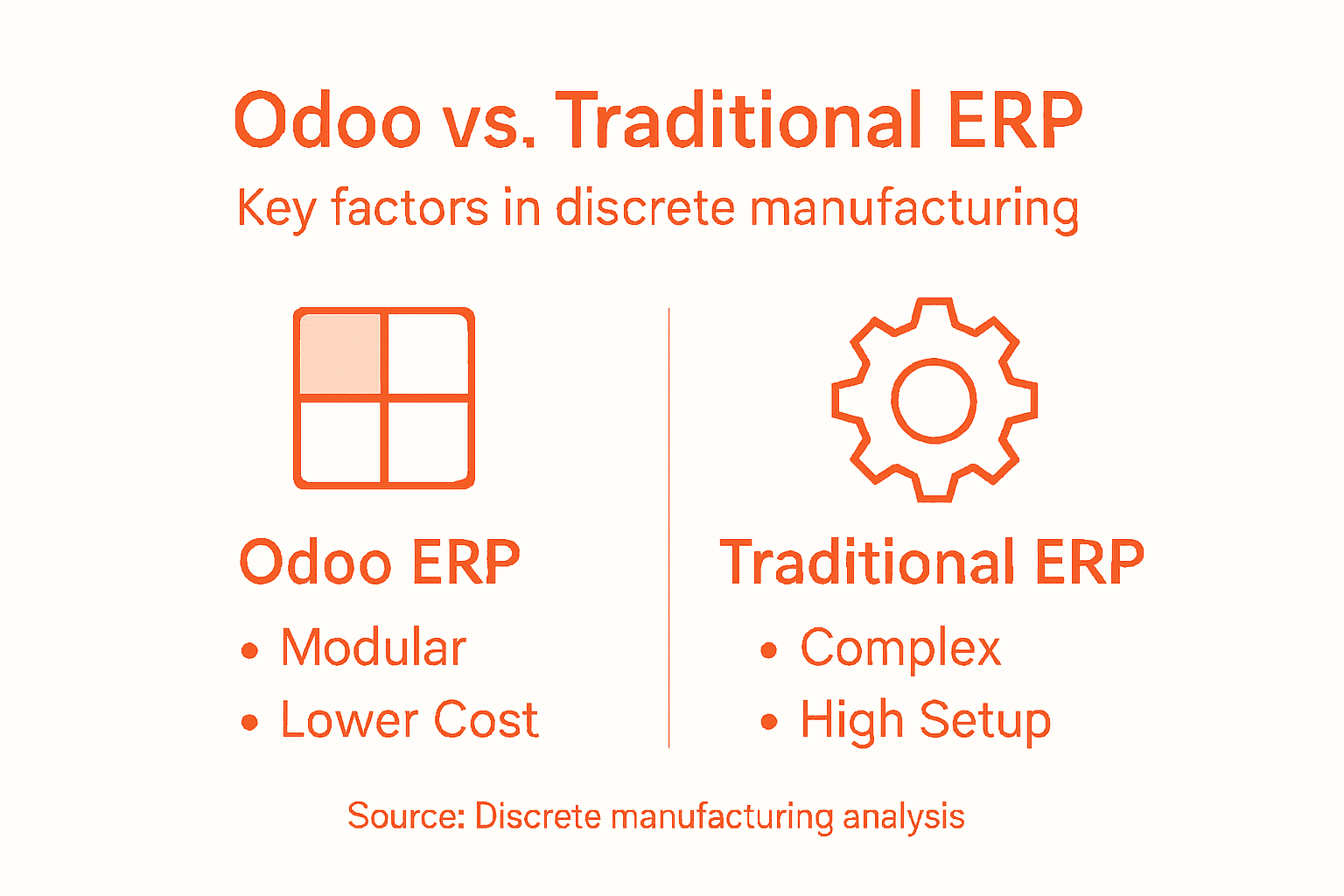
Traditional ERP systems typically require substantial upfront investments and complex implementation processes, often creating technological barriers for mid-sized manufacturers. Odoo disrupts this model by offering a more accessible, user-friendly platform that maintains enterprise-grade functionality. Its open-source framework allows unprecedented customization, enabling manufacturers to tailor the system precisely to their unique operational requirements without incurring prohibitive development costs. The platform’s modular design means businesses can start with core functionalities and incrementally expand their technological capabilities as they grow.
This comparison highlights key differences between Odoo and traditional ERP systems for manufacturers:
| Aspect | Odoo ERP | Traditional ERP (e.g., SAP, Oracle) |
|---|---|---|
| Cost Structure | Lower initial costs, open source | High upfront investment, costly licensing |
| Customization | Highly flexible, modular | Often requires expensive development |
| Implementation | Faster, phased deployment | Prolonged, complex rollout |
| Scalability | Grows with business, easy modules | Scaling may require additional infrastructure |
| Community Support | Active global open-source forum | Vendor-driven, limited to paid support options |
Pro tip: Conduct a comprehensive total cost of ownership analysis comparing Odoo with traditional ERP systems, considering not just initial implementation expenses but long-term scalability and customization potential.
Unlock the Full Potential of Odoo ERP for Discrete Manufacturing
Navigating the complexities of discrete manufacturing demands an ERP solution that aligns perfectly with your unique production workflows. If you are facing challenges like data migration complexity, process redesign, or user resistance, Odoo’s modular approach offers real-time operational visibility, precise bill of materials management, and seamless integration across manufacturing, inventory, purchase, sales, and quality management functions. These features directly address the pain points highlighted in “Why Odoo Is Transforming Discrete Manufacturing ERP” and empower mid-sized manufacturers to optimize costs and boost efficiency.
Request A Free Demo
Take the next step in transforming your manufacturing operations with the largest Odoo ERP implementer in North America. Bista Solutions, a trusted Odoo Gold Partner recognized consistently for excellence, delivers tailored, scalable ERP solutions designed to meet your exact needs. Don’t let common implementation challenges hold your business back. Reach out to our expert team today to schedule a consultation and experience unmatched support at every step.
Connect with us now through our contact page and discover how our Odoo Manufacturing ERP Solution and Production Planning & Scheduling ERP services can revolutionize your discrete manufacturing processes.
Frequently Asked Questions
What is Odoo ERP and how does it support discrete manufacturing?
Odoo ERP is a comprehensive software solution designed to manage various aspects of discrete manufacturing, including production orders, inventory control, quality management, and financial tracking. Its modular architecture allows manufacturers to customize workflows according to their specific operational needs.
What are the key features of Odoo for discrete manufacturing?
Key features include detailed bill of materials (BOM) management, real-time production tracking, inventory optimization, integrated quality control processes, and comprehensive reporting and analytics, all aimed at enhancing manufacturing efficiency.
How can Odoo ERP benefit mid-sized manufacturers?
Odoo ERP offers mid-sized manufacturers cost optimization, scalability, operational visibility, compliance management, and resource efficiency. It provides tools to streamline processes, reduce expenses, and enhance competitive agility in the market.
What challenges might manufacturers face when implementing Odoo ERP?
Common implementation challenges include data migration complexity, process redesign to align with the new system, user resistance to change, bridging skills gaps, and finding the right balance between standard features and unique manufacturing requirements.
Recommended
- Odoo Manufacturing ERP Solution. Odoo Manufacturing Module
- Odoo 15. Migrate your Odoo ERP to Odoo 15. Bista the best Odoo Partner.
- Electronic repair ERP. ERP for robotic & electronic repair.
- What is Manufacturing Execution Systems?. Integrate MES with Odoo ERP
- Custom Development & Automation – Stonos Solutions
